WTF Is El Niño? And What Does It Mean for South Africa?
El Niño is developing, and it could influence South Africa's weather in the months ahead. Here's what it is, how it works, and what it could mean for summer.
You've probably heard the words El Niño and La Niña thrown around whenever forecasters start talking about the months ahead. But what exactly are they, and why does something happening thousands of kilometres away in the Pacific Ocean matter to us here in South Africa?
Well, El Niño is back in the conversation, and this time, forecasters are watching it closely.
So, let's break it down without making your brain feel like it's sitting through a three-hour weather science lecture.
What Is El Niño?
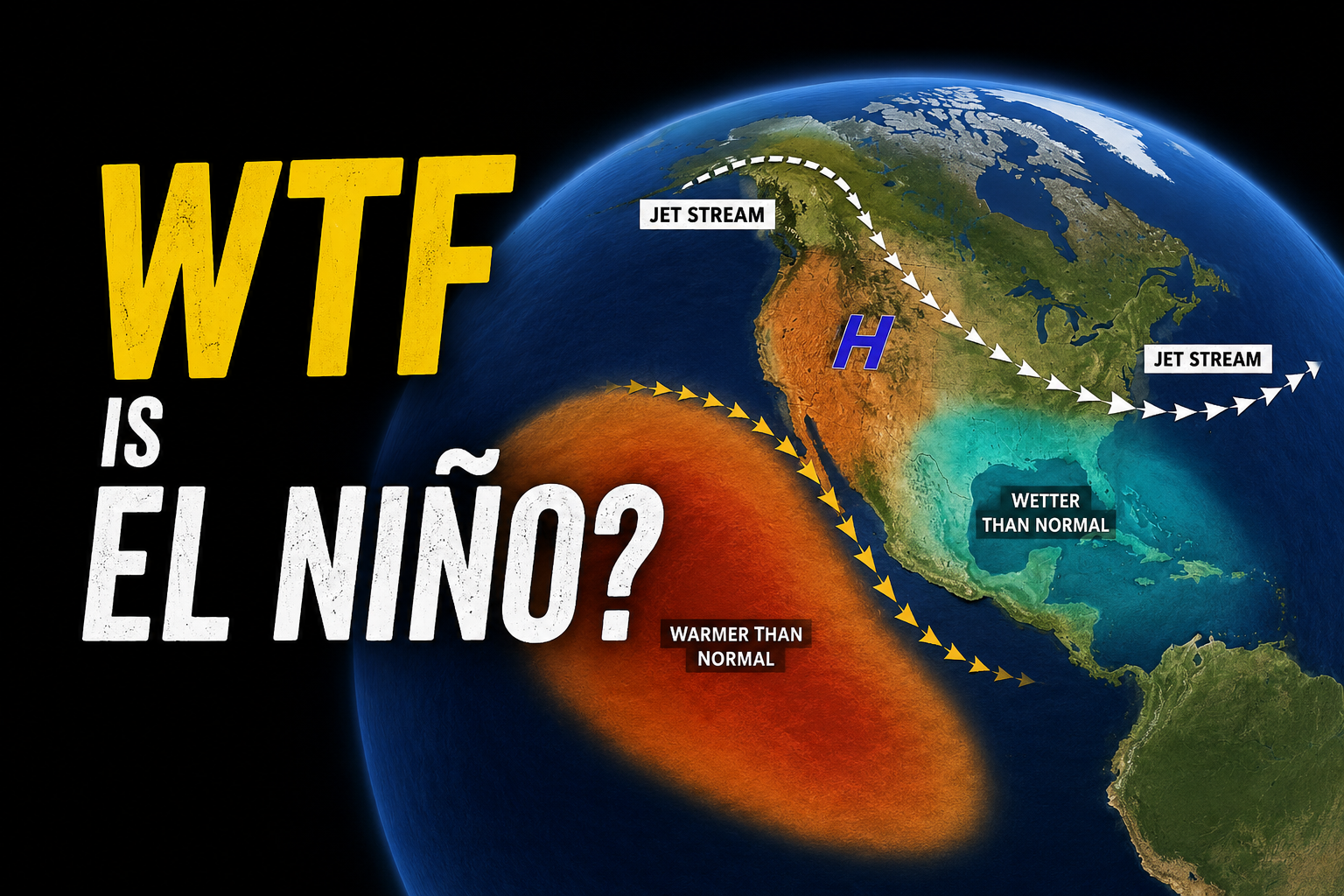
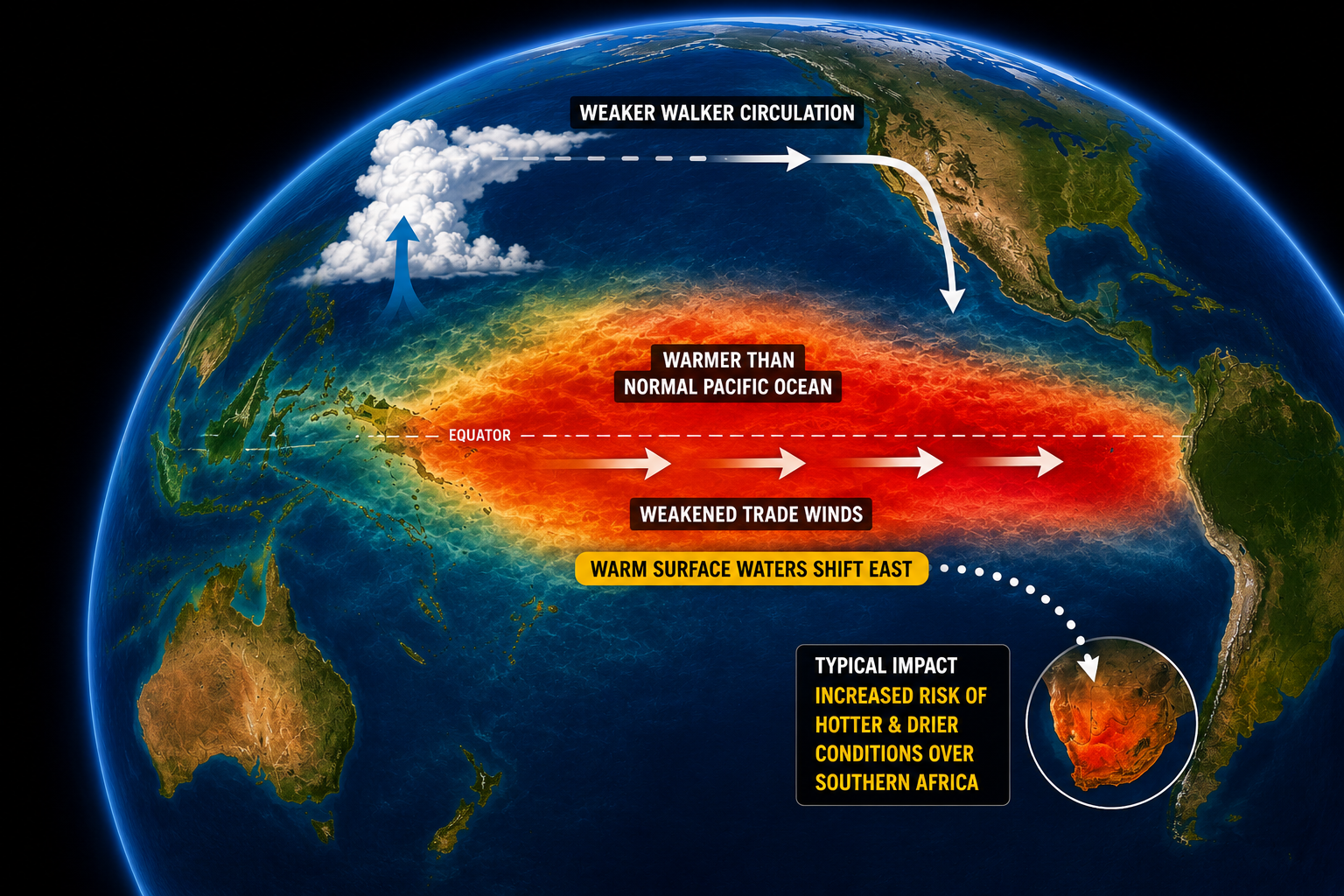
El Niño is a natural climate pattern that occurs when sea surface temperatures in the central and eastern tropical Pacific Ocean become warmer than normal.
That might sound like a problem for fish, surfers and people living around the Pacific, but the effects don't stay there.
The oceans and atmosphere are connected in some very complicated ways. When a huge area of the Pacific Ocean warms up, it can influence atmospheric circulation, shifting wind patterns and changing where rain and storms are more likely to develop.
The result is a domino effect that can influence weather patterns across large parts of the world.
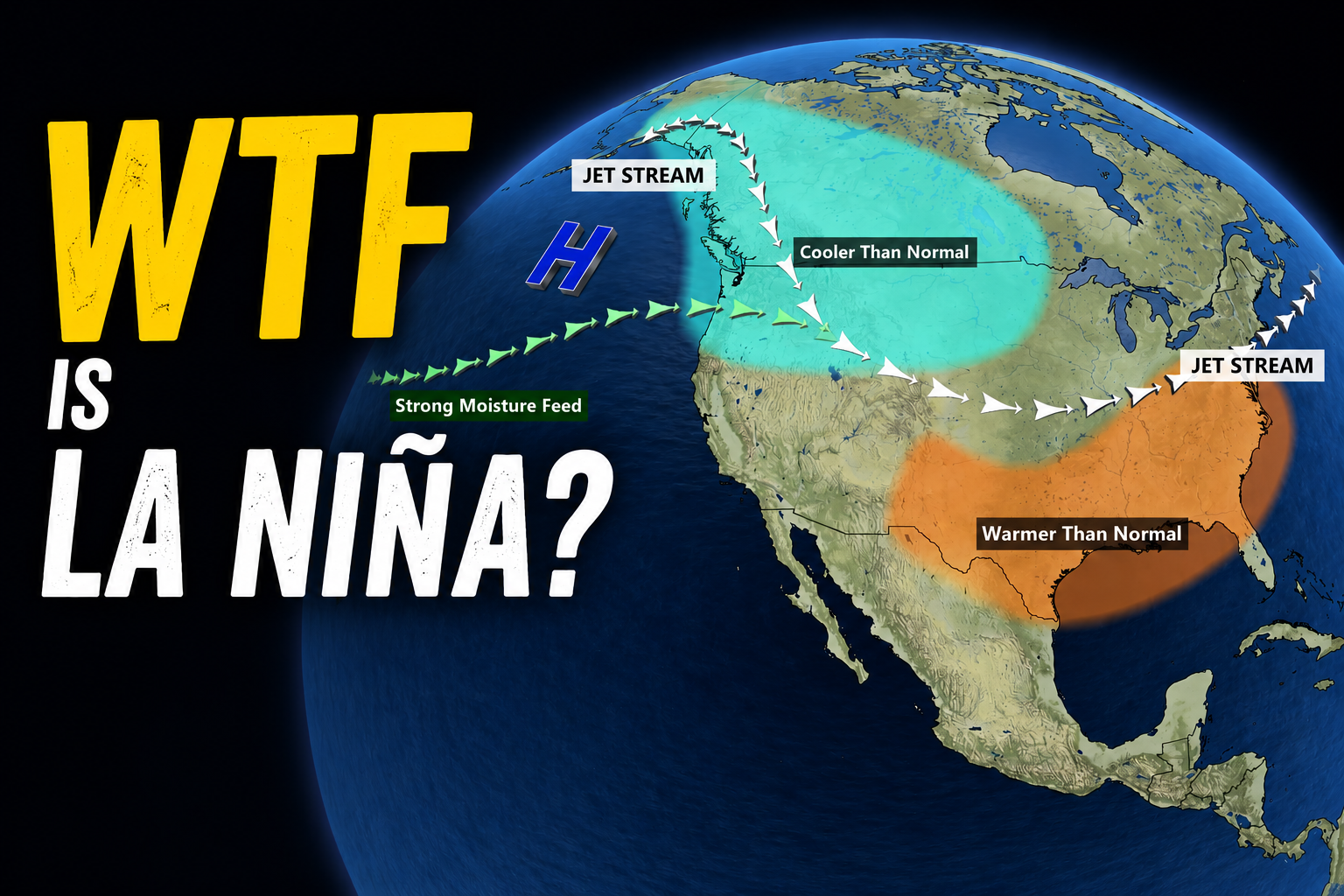
El Niño is one half of a larger natural climate cycle called the El Niño-Southern Oscillation, or ENSO. Its cooler counterpart is La Niña.
If you want to know more about that side of the cycle, we've already covered it in our article, How La Niña Shapes South Africa's Weather.
Think of El Niño and La Niña as two different settings on the same enormous climate system. Neither one controls the weather like a remote control, but both can shift the odds of certain types of weather occurring.
So, What Does El Niño Mean for South Africa?
This is where things get interesting.
For much of South Africa, El Niño is generally associated with an increased likelihood of hotter and drier conditions, particularly during the summer rainfall season.
That can mean:
- Higher temperatures
- Below-average rainfall in some regions
- Increased pressure on water resources
- Greater drought risk
- More challenging conditions for agriculture
But there's an important catch.
El Niño does not mean South Africa is guaranteed to have a dry summer.
Climate patterns influence probabilities. They don't send a memo to every cloud in the country telling it to cancel its plans.
Local weather is still affected by many other factors, including atmospheric circulation, sea temperatures around southern Africa and Indian Ocean conditions.
So, while El Niño can tilt the odds towards hotter and drier conditions in many parts of South Africa, it doesn't mean every province will experience the same thing.
Why Are Forecasters Watching 2026 So Closely?
The current El Niño event is developing at a time when scientists are already watching global temperatures and extreme weather closely.
The World Meteorological Organization has said El Niño conditions are developing and could influence global temperature and rainfall patterns. NOAA's July 2026 assessment also says El Niño is expected to strengthen through the end of the year, although the exact strength and local impacts remain uncertain.
That uncertainty is important.
There has been plenty of dramatic discussion around the possibility of an exceptionally strong El Niño, but forecasts can change as the event develops. Scientists will continue monitoring ocean temperatures and atmospheric conditions to get a clearer picture of what lies ahead.
For South Africa, researchers are already urging people to prepare for the possibility of a warmer and potentially drier summer, while stressing that there is still uncertainty about exactly how the event will play out locally.
In other words, this isn't the time to panic.
It's the time to pay attention.
Could El Niño Cause Drought in South Africa?
It can increase the risk, but it's not a guarantee.
One of the biggest concerns during a strong El Niño is reduced rainfall across parts of southern Africa during the summer rainfall season. If that happens alongside high temperatures, the combination can put additional pressure on dams, rivers, groundwater and agriculture.
Farmers may face more challenging growing conditions, while water managers have to keep a close eye on available supplies.
But South Africa's weather doesn't follow a simple "El Niño equals drought" formula.
Some areas may receive near-normal rainfall. Others could experience isolated heavy rainfall events despite an overall drier seasonal pattern.
That's because climate patterns work on a large scale, while the weather we experience in our own backyard is influenced by many smaller-scale systems.
So yes, El Niño can raise the odds of a drier season.
But it doesn't mean you should look at the sky, see a cloud and immediately accuse it of breaking the forecast.
El Niño vs La Niña: What's the Difference?
The easiest way to think about it is this:
El Niño: Warmer-than-normal Pacific Ocean waters, often associated with hotter and drier conditions across much of South Africa.
La Niña: Cooler-than-normal Pacific Ocean waters, often associated with increased chances of wetter conditions across many parts of South Africa.
La Niña can bring benefits such as improved water supplies and better conditions for agriculture, but too much rain can also lead to flooding, infrastructure damage and crop losses.
El Niño can increase the risk of heat and drought, but not every El Niño event produces exactly the same result.
Neither is automatically "good" or "bad".
It all depends on how strong the event becomes, where you live and what the rest of the atmosphere decides to do.
Should South Africans Be Worried?
Not necessarily.
But it's worth being prepared.
If El Niño strengthens as expected, South Africans should keep an eye on seasonal forecasts, especially heading into the summer rainfall season.
Farmers will be watching rainfall forecasts and soil moisture. Water managers will be monitoring dam levels. And everyone else will probably be watching the temperature forecast and wondering why the sun has suddenly decided to turn the country into an air fryer.
The important thing is to remember that seasonal climate forecasts are not the same as your daily weather forecast.
An El Niño outlook can tell us that the odds of certain conditions may increase over a season. It can't tell you whether it will rain at your house next Tuesday.
That's where your regular weather forecast comes in.
So, What Should We Expect?
The developing El Niño is something South Africans should keep an eye on, particularly as we move towards the summer rainfall season.
The big question isn't simply whether El Niño is happening. It's how strong it becomes and how its influence interacts with other climate and weather patterns.
For now, the message is simple: prepare, but don't panic.
Keep an eye on water resources, stay up to date with seasonal forecasts and remember that climate patterns change the odds. They don't write the weather forecast in permanent ink.
We'll be watching it closely and keeping you updated as the picture becomes clearer.
Because when it comes to El Niño, one thing is certain: the Pacific Ocean is a long way away, but what happens there can have a surprisingly big impact on the weather right here at home.