WTF Is an Atmospheric River?
An atmospheric river is a massive stream of moisture in the atmosphere that can transport more water than some of the world's largest rivers. When these "rivers in the sky" make landfall, they can unleash days of heavy rain, flooding, and severe weather. Here's what they are, how they form, and why meteorologists keep a close eye on them.
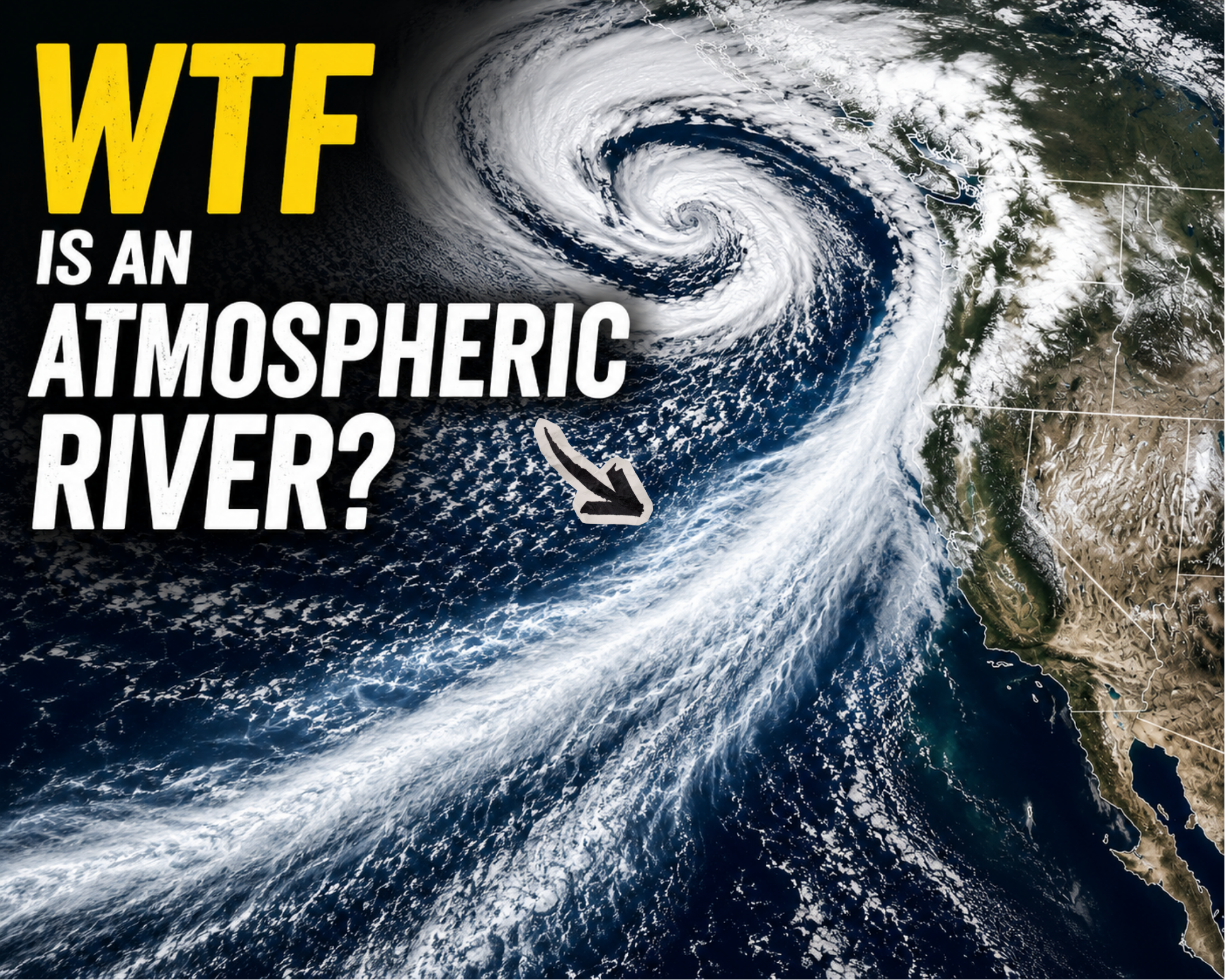
If you've been following weather headlines lately, you've probably seen the term "atmospheric river" popping up more often. It sounds like something straight out of a disaster movie, but it's actually a very real weather phenomenon responsible for some of the heaviest rainfall events on Earth.
So, WTF is an atmospheric river?
Simply put, an atmospheric river is a long, narrow band of moisture in the atmosphere that transports enormous amounts of water vapour from tropical oceans to other parts of the world. Think of it as a giant river in the sky.
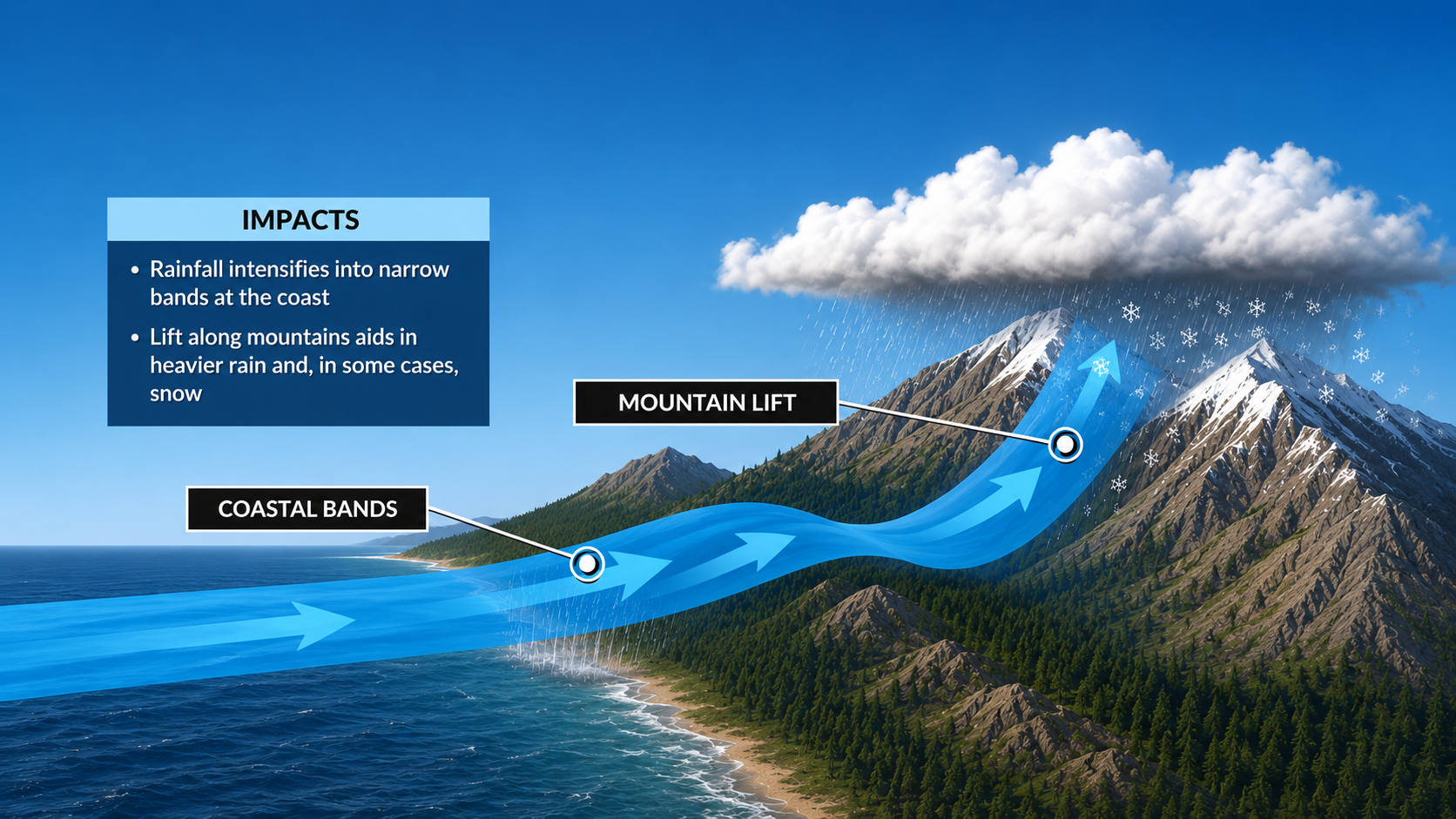
When this moisture-laden air eventually reaches land and is forced upward by mountains or weather systems, the water vapour cools, condenses, and falls as rain or snow. And when we say rain, we mean a lot of rain.
A River Bigger Than Any on Earth
Here's the crazy part: some atmospheric rivers can transport more water than the Amazon River itself.
These invisible rivers can stretch for thousands of kilometres across oceans while remaining only a few hundred kilometres wide. Most of the time they drift harmlessly through the atmosphere, helping move moisture around the planet.
But when conditions are right, they can unleash days of relentless rainfall.
Why Do Atmospheric Rivers Matter?
Atmospheric rivers are a bit like weather's double-edged sword.
On one hand, they provide much-needed rainfall to drought-stricken regions and replenish reservoirs, rivers, and groundwater supplies.
On the other hand, when they're particularly strong or slow-moving, they can trigger:
- Flash flooding
- River flooding
- Landslides
- Infrastructure damage
- Coastal erosion
- Dangerous travel conditions
In some parts of the world, a single atmospheric river event can deliver an entire season's worth of rainfall in just a few days.
How Do They Form?
Atmospheric rivers typically begin over warm tropical or subtropical oceans.
As the sun heats the ocean surface, water evaporates into the atmosphere. Strong winds then gather and transport this moisture along a concentrated corridor.
When that corridor encounters cooler air, mountains, or low-pressure systems, the moisture is squeezed out in the form of heavy precipitation.
It's essentially nature's version of turning a garden hose into a pressure washer.
Do Atmospheric Rivers Affect South Africa?
While the term is most commonly used in places like the west coast of North America, atmospheric river-like moisture plumes can influence weather patterns around the world, including Southern Africa.
When large amounts of tropical moisture are pulled southward and interact with cold fronts or low-pressure systems, they can contribute to widespread rainfall and flooding events.
Meteorologists continue to study these moisture transport systems to better understand their impact on regional weather and extreme rainfall events.
Are They Becoming More Common?
Scientists believe that as global temperatures rise, the atmosphere's ability to hold moisture increases.
A warmer atmosphere can carry more water vapour, which means future atmospheric rivers may become wetter and more intense. While the number of atmospheric rivers may not increase dramatically, the strongest events could produce heavier rainfall and greater flooding risks.
That's one reason weather experts pay close attention whenever a significant atmospheric river develops.
The Bottom Line
An atmospheric river is essentially a massive conveyor belt of moisture in the sky. Most of the time it's simply part of Earth's natural water cycle, but when conditions line up, it can deliver extraordinary amounts of rain in a short period.
So the next time you hear forecasters talking about an atmospheric river, you'll know it's not an actual river floating above your head.
It's just weather doing weather things on a truly epic scale.
And honestly, that's pretty WTF.