WMO warns of drought risk across southern Africa through March 2027
The WMO is warning that a strengthening El Niño could bring a hotter, drier summer to South Africa from October 2026 to March 2027, raising the risk of drought, water stress and pressure on food security.
The World Meteorological Organization (WMO) is warning that a strengthening El Niño could bring drier and hotter conditions to South Africa between October 2026 and March 2027, raising the risk of drought, water stress and pressure on food security.
The warning comes from the South-West Indian Ocean Climate Outlook Forum, hosted by the Seychelles Meteorological Agency from 15 to 17 September. South Africa took part alongside Comoros, La Réunion, Madagascar, Malawi, Mauritius, Mozambique, Seychelles and Tanzania. The outlook covers October to December 2026 and January to March 2027.
What it means for South Africa
The outlook singles out South Africa as part of the southern region facing drier conditions and increased drought risk. The forum says this could threaten agriculture, pasture, water resources, food security and livelihoods. Southern and central Mozambique, Malawi and south-western Madagascar face similar risks.
Above-normal temperatures are expected across the entire region, with a substantially increased likelihood of exceptionally high temperatures. Drought and heat may reduce agricultural productivity and increase water stress in southern areas.
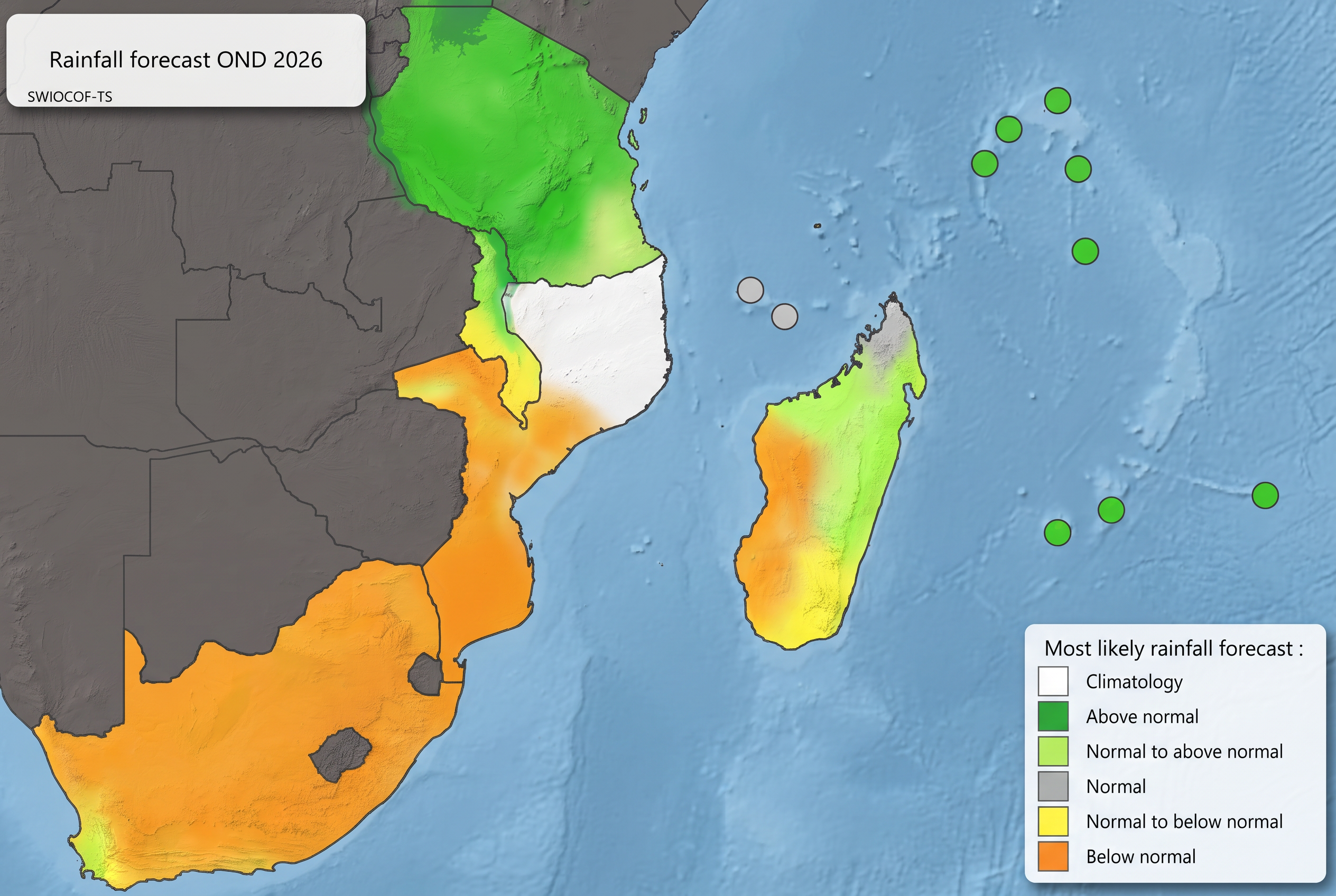
Rainfall forecast: October–December 2026
Fewer cyclones, but not zero risk
Below-normal tropical cyclone activity is expected for the basin overall, influenced by El Niño. Cyclone tracks are expected to shift southward, which could reduce landfall risk for Madagascar and Mozambique. The WMO stresses that below-normal activity across the basin does not mean an absence of local cyclone risk.
A very different picture to the north
Not everywhere will be dry. Tanzania, northern Malawi, Seychelles and parts of the Mascarene Islands are expected to be wetter, with a higher risk of flash floods, landslides and water contamination. Madagascar shows mixed signals: the north and east lean wetter, while the south-west leans drier.
The forum urged governments and communities to prepare for multiple hazards, with southern areas told to strengthen preparedness for drought, water stress and food-security risks. The outlook also flags implications for health, marine ecosystems and fisheries.
For South Africans, that means keeping a close eye on water use, heat safety and local weather updates through the summer. Check the South African Weather Service for forecasts and warnings.
Source: WMO, "El Niño will unleash multiple hazards in South-West Indian Ocean region", 1 October 2026.