Europe's Seas Are Breaking Temperature Records
Europe has endured a summer of extreme heat, drought and wildfires. Now the heat is spreading into the sea, with the Mediterranean recording its hottest July on record and some waters reaching extraordinary temperatures.
Europe's extreme summer isn't just being felt on land. The seas surrounding the continent are also running at extraordinary temperatures, with scientists warning that an unprecedented marine heatwave is putting increasing pressure on marine ecosystems.
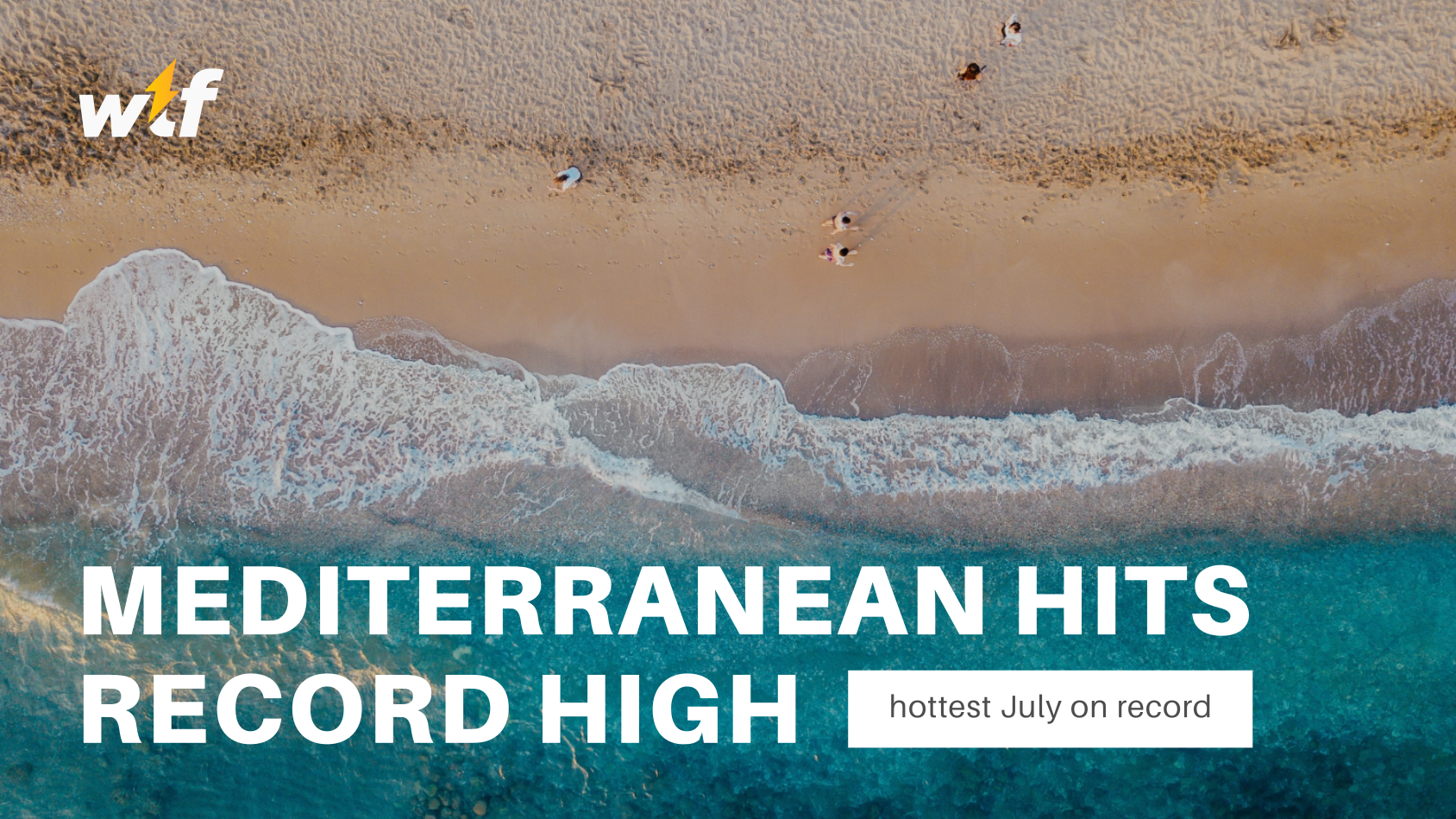
The Mediterranean recorded its hottest July on record, with an average sea-surface temperature of around 27°C. That may not sound extraordinary for a Mediterranean summer, but the scale and persistence of the warmth is what has scientists concerned.
In some locations, temperatures have been far higher. A buoy near Mallorca recorded a sea-surface temperature of around 33°C in early August, while satellite observations have shown parts of the western Mediterranean running as much as 6°C above the long-term average.
And it isn't just the Mediterranean.
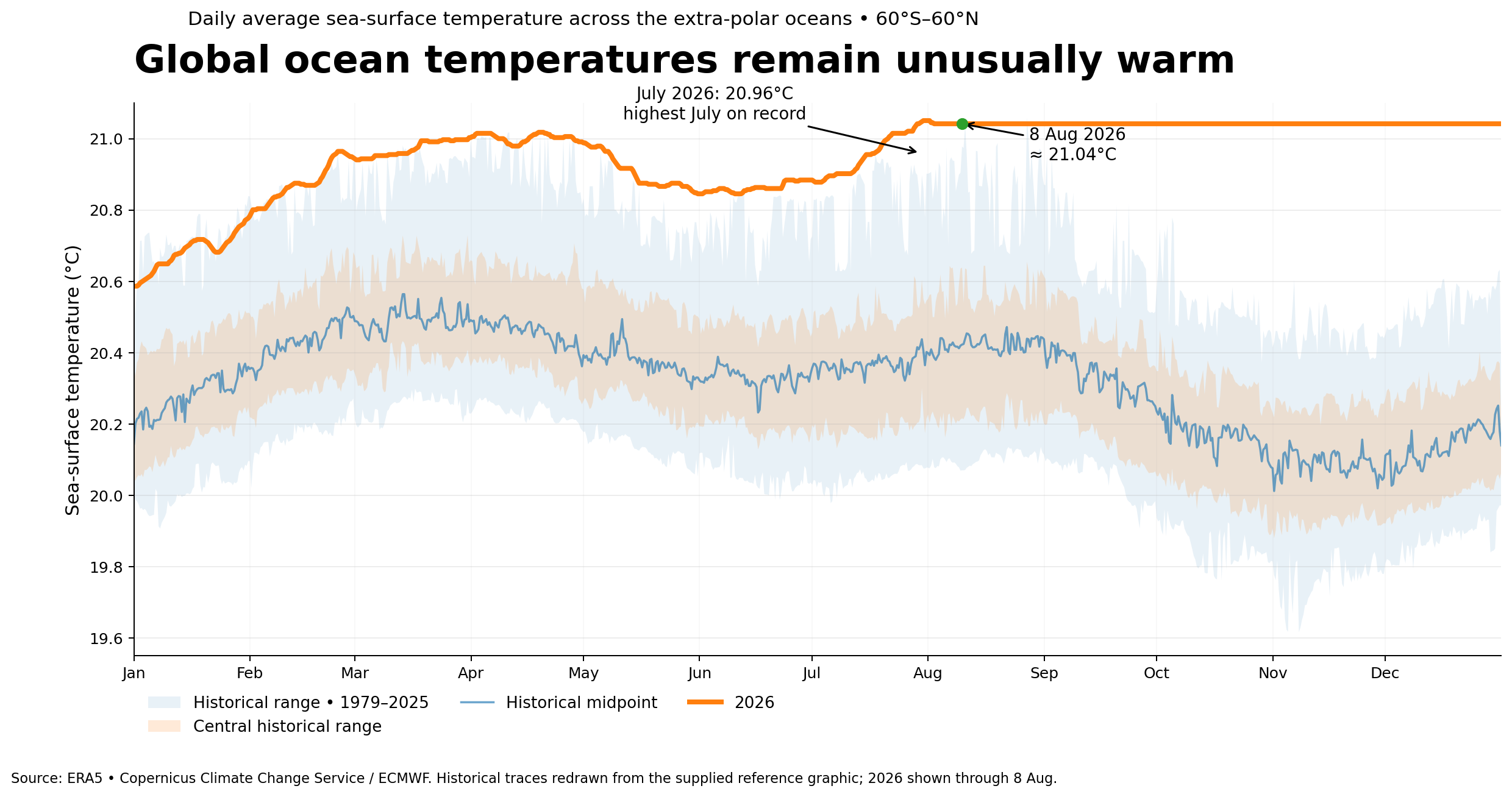
Marine heatwave conditions have spread across large areas of European waters. The latest analysis found that around 80% of the western Mediterranean and almost 90% of the Bay of Biscay and Iberian coastal waters were experiencing marine heatwave conditions.
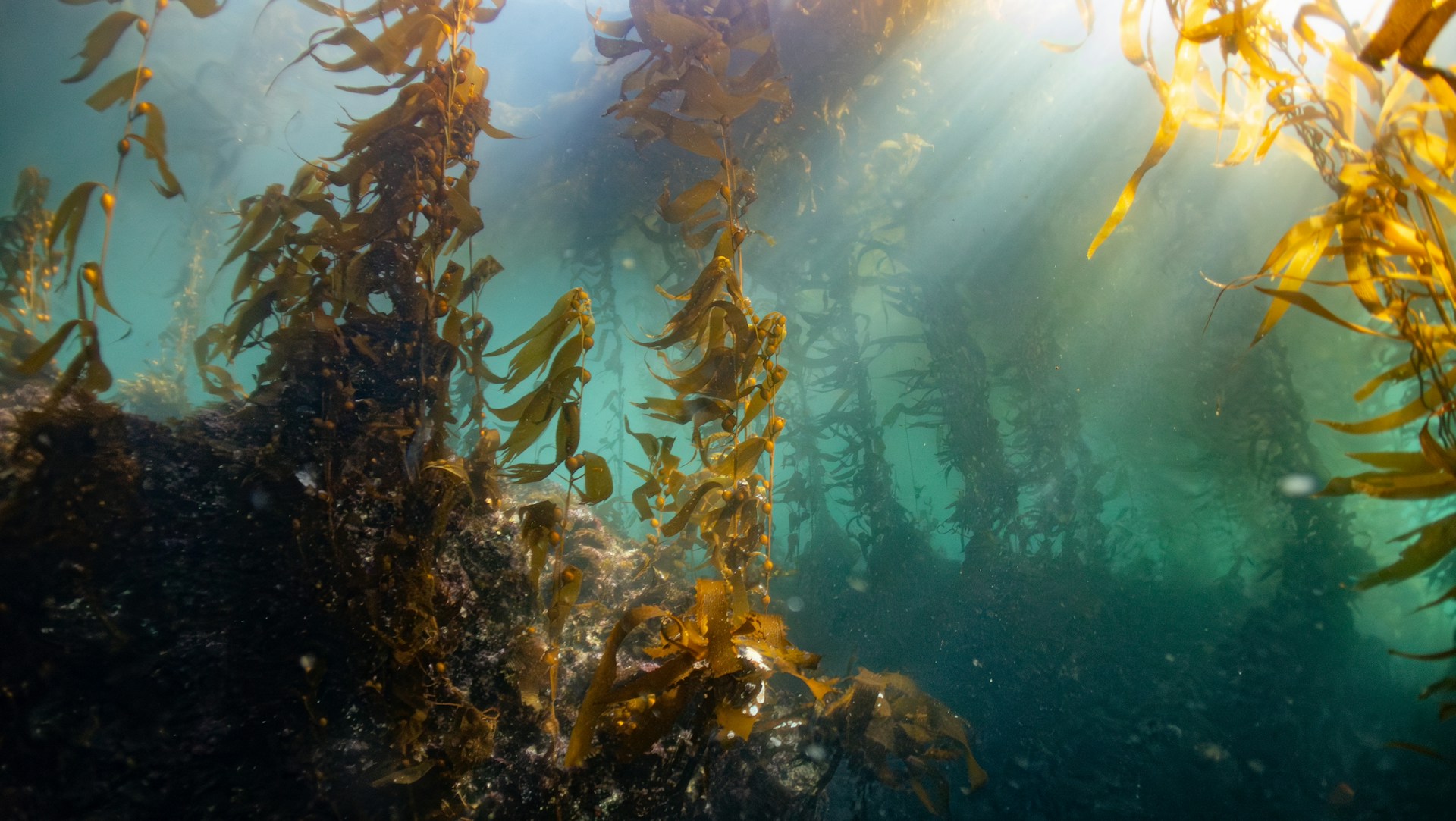
The warmth is already changing the marine environment. Species that normally prefer warmer waters are appearing farther north, while some cold-water species are being pushed into deeper or cooler areas. Scientists are also concerned about stress to kelp forests, seagrass and other important marine habitats.
There could also be consequences beyond the ocean itself. Warmer seawater provides more energy and moisture to the atmosphere, potentially helping to fuel heavier rainfall and thunderstorms when the right weather systems develop. At the same time, prolonged heat and dryness on land have helped create the conditions for devastating wildfires across parts of Europe this summer.
The latest scientific analysis points strongly to human-caused climate change as the main reason these temperatures have become so extreme. Researchers estimate that climate change added roughly 2°C of warming to the Mediterranean and around 1.4°C to western European seas during the event. They conclude that temperatures this extreme would have been extraordinarily unlikely without human-caused warming.
For holidaymakers, an unusually warm sea might sound like good news. For the marine environment, however, it is a very different story.
The Mediterranean is a semi-enclosed sea, meaning prolonged periods of extreme heat can have significant effects on the ecosystems living beneath the surface. If these events become more frequent and last longer, scientists warn that the consequences could include species die-offs, disrupted food chains and major changes to marine ecosystems.
And perhaps the strangest part of Europe's summer is that the extreme heat isn't stopping at the coastline.
From record-breaking temperatures on land to seas that are several degrees warmer than normal, the entire region is experiencing an extraordinary summer of heat.