Japan Hit by Extraordinary Rainfall as Chiba Floods
Japan has been hit by an extraordinary spell of rainfall, with parts of Chiba Prefecture recording more than 360 mm in just 24 hours. Roads and railways were flooded, thousands of people were stranded and the country's highest heavy-rain warning was issued as an exceptional downpour overwhelmed parts of the region.
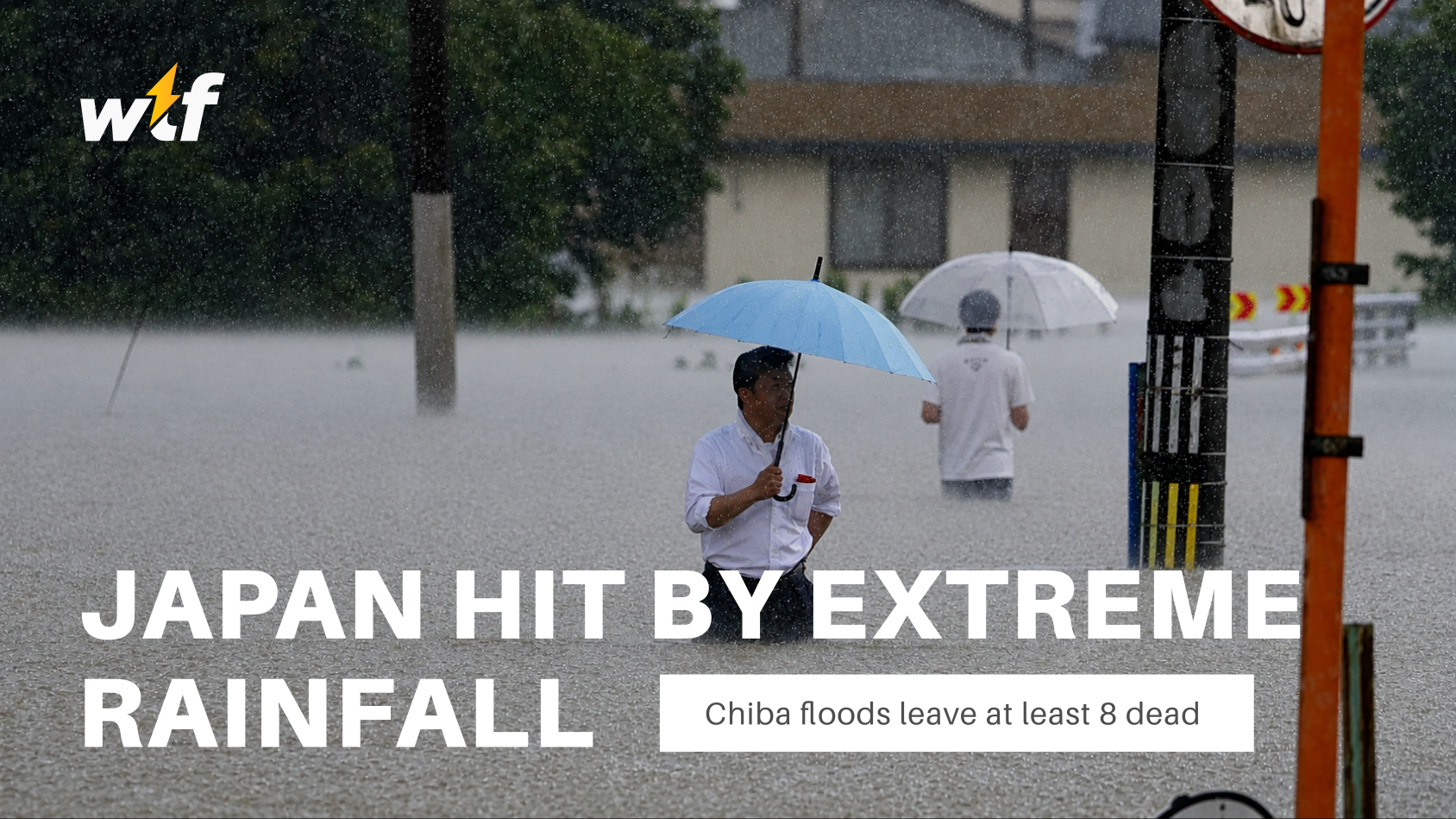
Eastern Japan has been hit by an exceptional burst of rainfall, with Chiba Prefecture, just east of Tokyo, among the hardest-hit areas.
The most remarkable figures came from Chiba City, where 115 mm of rain fell in just one hour on 13 August. Nearby Sakura also broke its previous hourly rainfall record, recording 97 mm in an hour.
For some locations, the rainfall accumulated incredibly quickly. More than 360 mm fell in 24 hours in parts of Chiba, while Chiba City received more than three times its typical rainfall for the entire month of August in a single event.
The intensity of the rainfall prompted the Japan Meteorological Agency to issue its highest-level heavy-rain warning for parts of Chiba — the first time that level of warning had been issued there since Japan's current warning system was introduced.
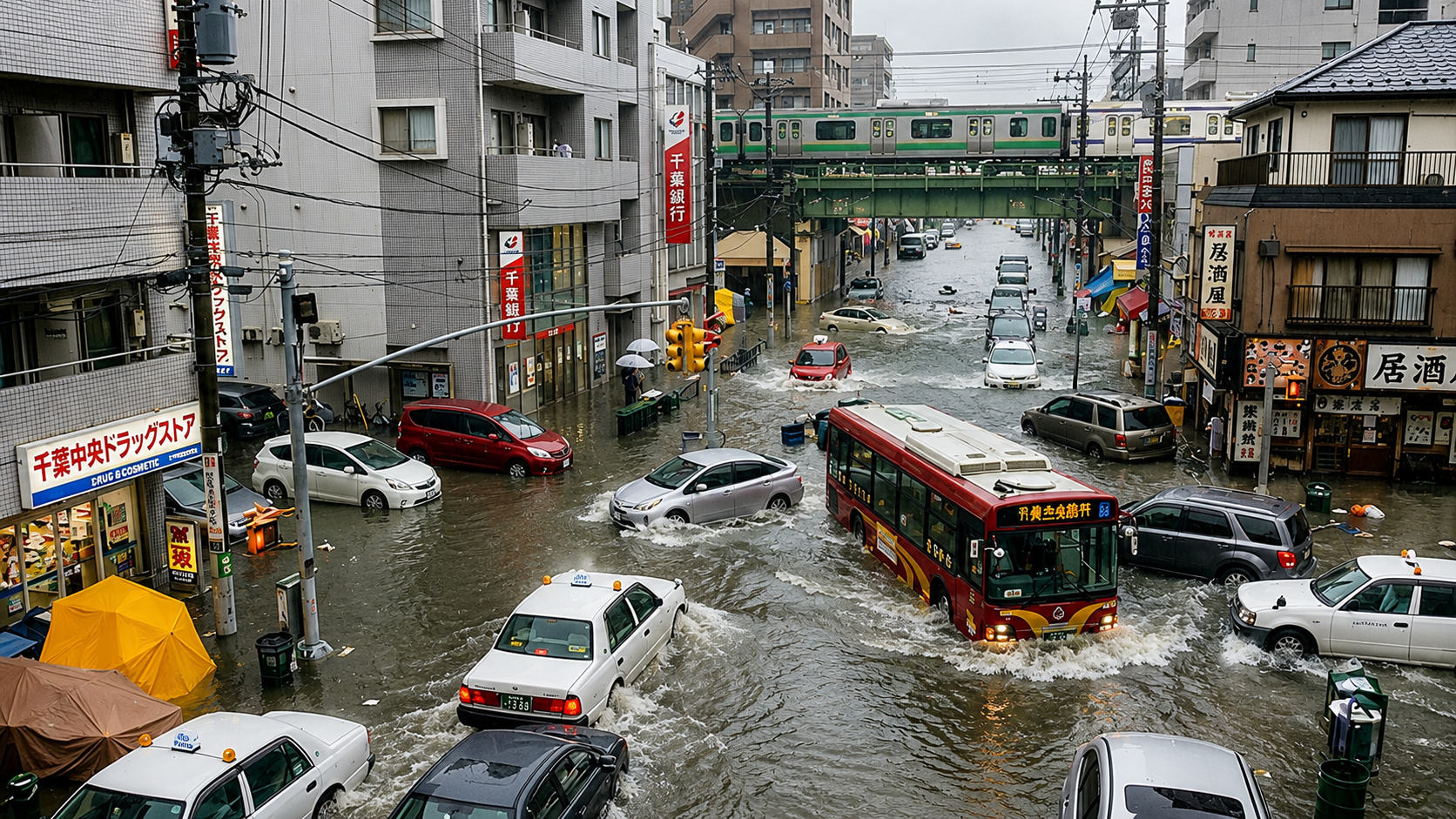
The enormous volume of water quickly overwhelmed drainage systems, rivers and roads.
Floodwater spread through towns and cities, leaving vehicles submerged and forcing residents to evacuate. Roads and railway lines were inundated, while thousands of people were left stranded during one of Japan's busiest holiday periods.
The disruption extended to Narita International Airport, where thousands of travellers were stranded after transport links around the airport were affected by the flooding. Power outages also affected tens of thousands of households across the prefecture.
The rainfall also created dangerous conditions for emergency services, with flooding and landslides becoming major concerns.
Japan is particularly vulnerable to heavy rainfall because of its geography and climate.
During summer, warm and moisture-rich air from the Pacific can feed into weather systems around the Japanese archipelago. When this moisture converges with other weather systems, enormous amounts of water can be released over relatively small areas.
Japan also has steep mountainous terrain, meaning rainfall can quickly run downhill into rivers and urban areas. In densely populated regions such as the greater Tokyo area, that combination can create serious flood risks when rainfall rates become extreme.
What made the recent event particularly concerning was not simply the amount of rain, but how quickly it fell.
Rainfall totals that would normally accumulate over much longer periods were delivered within hours, leaving little time for water to drain away or for people to react.
Japan is no stranger to flooding and torrential rain, but officials described this particular event as extraordinary.
A Japan Meteorological Agency official described the rainfall as reaching an "unprecedented level", while Chiba's governor said the situation was extremely unusual even by Japan's historical weather standards.
At least eight people had been reported killed in the flooding by 14 August, with homes damaged, vehicles abandoned and more than a thousand households reporting flooding in parts of Chiba.
The rainfall comes during an active period of weather across East Asia, with heavy rain also affecting South Korea and Taiwan.
Meanwhile, Typhoon Saudel is currently tracking toward the southern Japanese islands, with Okinawa and the Amami Islands facing the possibility of very strong winds, dangerous seas and further heavy rainfall later this week.
That means the recent flooding may not be the last major rainfall event Japan sees this month.
Events like the Chiba flooding are a reminder that extreme rainfall is not simply about how much rain falls over a season. Increasingly, the biggest danger comes from how much rain can fall in a matter of hours.
For communities living in vulnerable areas, that difference can turn an ordinary summer rainstorm into a major disaster remarkably quickly.